Health and Safety Policy for Cleaners Tufnell Park
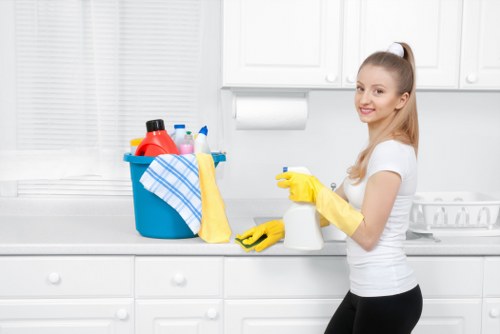 This health and safety policy sets out the principles and working practices that support safe, consistent, and responsible cleaning services. For cleaners Tufnell Park, the aim is to protect staff, clients, visitors, and anyone else who may be affected by cleaning activity. The policy applies to routine cleaning, deep cleaning, waste handling, use of equipment, and movement within indoor spaces. It also reflects the need for clear communication, sensible supervision, and careful handling of materials. Safety is part of quality service, not a separate task.
All cleaning work must be carried out with a clear focus on risk control. Before any task begins, cleaners should assess the area, identify possible hazards, and choose the safest method available. This includes checking floors for slip risks, identifying fragile items, noticing exposed cables, and reviewing whether ventilation is adequate. The approach should always be practical and proportionate. Where conditions change during the job, the cleaner must pause and reassess. The same standard applies whether the assignment involves domestic spaces, offices, communal areas, or other environments.
Every cleaner is responsible for working carefully, following instructions, and reporting hazards promptly. Supervisors are responsible for ensuring that equipment is maintained, staff are suitably trained, and tasks are matched to the cleaner’s capabilities. In a cleaning health and safety policy, accountability matters at every level. No one should feel pressured to complete a task in unsafe conditions. If a hazard cannot be controlled immediately, the area should be made safe if possible and the issue escalated without delay.
Safe Working Practices
Safe practice begins with preparation. Cleaners should wear appropriate clothing and any required personal protective equipment, such as gloves, protective footwear, or eye protection when needed. Items should be used correctly and replaced when damaged. Good posture and sensible lifting techniques are essential, especially when moving bins, equipment, or supplies. Heavy loads should be reduced where possible, and awkward movements should be avoided. The process of cleaning should be steady and controlled rather than rushed.
Cleaning products must be handled in line with the manufacturer’s instructions and workplace procedures. Products should never be mixed unless specifically approved, and containers must be clearly labelled and stored securely. A safe cleaning policy should always emphasise correct dilution, careful application, and proper disposal. Staff must be aware of the difference between general cleaning agents and stronger substances, including those that may irritate skin, eyes, or lungs. Ventilation should be maintained whenever products are used in enclosed spaces.
Equipment safety is equally important. Mops, vacuum cleaners, extension leads, spray tools, and other devices should be inspected before use to confirm they are in good working order. Faulty equipment must be removed from service and reported. 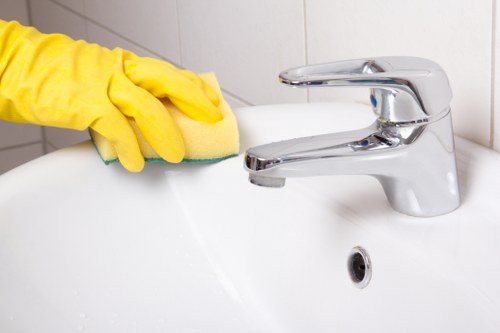 Electrical items should not be used with wet hands or in unsafe conditions. Cables should be positioned to reduce trip hazards, and equipment should be switched off and stored properly after use. Cleaners must not improvise with damaged tools or bypass safety features.
Risk Management and Incident Control
Risk management is an ongoing part of the role. A health and safety policy for cleaners should recognise that risk cannot be removed entirely, but it can be reduced through thoughtful planning and consistent behaviour. Common hazards include slips, trips, falls, manual handling strains, chemical exposure, poor lighting, and contact with sharp or contaminated items. Each situation should be approached with the question: what is the safest reasonable way to complete this task?
When working around members of the public or other building users, cleaners should keep equipment organised and avoid leaving areas unattended in a hazardous state. Wet floors, moved furniture, or temporary obstruction should be clearly managed and resolved as quickly as possible. Warning signs should be used where necessary. A calm, methodical pace is better than trying to finish quickly and creating unnecessary risk. Cleaners must also avoid distractions and maintain awareness of their surroundings throughout the job.
 If an accident, near miss, spill, cut, or exposure incident occurs, it must be reported immediately according to the workplace procedure. First aid should be sought where required, and the affected area should be secured. Reporting is not about blame; it is about prevention. Records of incidents help identify patterns, improve controls, and strengthen future practice. Any repeated issue should be reviewed so that the same problem does not continue unnoticed.
Training, Communication, and Welfare
Training and Supervision
Training is a core element of an effective cleaners’ safety policy. New staff should receive induction training that covers hazards, safe equipment use, emergency procedures, and reporting responsibilities. Refresher sessions should be provided when products, tools, or methods change. Supervisors should monitor work quality and safety performance, offering guidance where needed. The purpose of supervision is to support safe habits and encourage consistent standards across all tasks.
Communication must be clear, respectful, and timely. Instructions should be understood before work begins, particularly where the environment contains special risks or access restrictions. Cleaners should be encouraged to ask questions whenever a task is unclear. Good communication also includes passing on relevant information between shifts, such as areas that remain wet, items that have been moved, or equipment that requires attention. A strong cleaning safety policy depends on people sharing information rather than assuming others will notice a problem.
Welfare is part of safety. Staff should have reasonable access to rest breaks, drinking water, and suitable facilities where available. Tired or unwell workers are more likely to make mistakes, so workloads should be organised sensibly. Safe cleaning services are built on adequate staffing, realistic scheduling, and respect for human limits. Pressure to rush, skip checks, or ignore discomfort should never be accepted as normal practice.
Review, Monitoring, and Continuous Improvement
 This policy should be reviewed regularly to ensure it remains effective, practical, and aligned with the work being carried out. Reviews may be prompted by incidents, changes in equipment, updated procedures, or feedback from risk assessments. Managers should check whether staff are following safe systems of work and whether the controls in place are actually reducing risk. Where improvements are needed, they should be introduced without delay.
Monitoring can include inspections, observation of work practices, equipment checks, and review of incident reports. The goal is not excessive paperwork, but a reliable system that helps identify weaknesses early. A well-run health and safety framework for cleaners supports safe performance while maintaining service quality. Lessons learned from one task or site should be shared, so that good practice becomes routine rather than occasional.
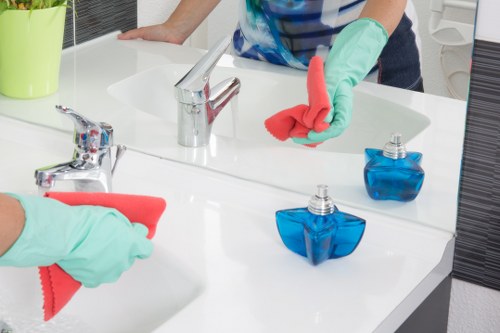 By following this policy, cleaners Tufnell Park can carry out their duties in a safe, professional, and responsible manner. The principles are straightforward: assess risks, use equipment properly, handle substances carefully, communicate clearly, and report concerns promptly. When these standards are applied consistently, they help protect people, reduce incidents, and create a safer environment for everyone involved in cleaning work.